- A List of Writing Contests in 2022 | Exciting Prizes!
- Em Dash vs. En Dash vs. Hyphen: When to Use Which
- Book Proofreading 101: The Beginner’s Guide
- Screenplay Editing: Importance, Cost, & Self-Editing Tips
- Screenplay Proofreading: Importance, Process, & Cost
- Script Proofreading: Rates, Process, & Proofreading Tips
- Manuscript Proofreading | Definition, Process & Standard Rates
- Tips to Write Better if English Is Your Second Language
- Novel Proofreading | Definition, Significance & Standard Rates
- Top 10 Must-Try Writing Prompt Generators in 2024
- 100+ Creative Writing Prompts for Masterful Storytelling
- Top 10 eBook Creator Tools in 2024: Free & Paid
- 50 Timeless and Unforgettable Book Covers of All Time
- What Is Flash Fiction? Definition, Examples & Types
- 80 Enchanting Christmas Writing Prompts for Your Next Story
- Your Guide to the Best eBook Readers in 2024
- Top 10 Book Review Clubs of 2025 to Share Literary Insights
- 2024’s Top 10 Self-Help Books for Better Living
- Writing Contests 2023: Cash Prizes, Free Entries, & More!
- What Is a Book Teaser and How to Write It: Tips and Examples
- Audiobook vs. EBook vs. Paperback in 2024: (Pros & Cons)
- How to Get a Literary Agent in 2024: The Complete Guide
- Alpha Readers: Where to Find Them and Alpha vs. Beta Readers
- Author Branding 101: How to Build a Powerful Author Brand
- A Guide on How to Write a Book Synopsis: Steps and Examples
- How to Write a Book Review (Meaning, Tips & Examples)
- 50 Best Literary Agents in the USA for Authors in 2024
- Building an Author Website: The Ultimate Guide with Examples
- Top 10 Paraphrasing Tools for All (Free & Paid)
- Top 10 Book Editing Software in 2024 (Free & Paid)
- What Are Large Language Models and How They Work: Explained!
- Top 10 Hardcover Book Printing Services [Best of 2024]
- 2024’s Top 10 Setting Generators to Create Unique Settings
- Different Types of Characters in Stories That Steal the Show
- Top 10 Screenplay & Scriptwriting Software (Free & Paid)
- 10 Best AI Text Generators of 2024: Pros, Cons, and Prices
- Top 10 Must-Try Character Name Generators in 2024
- 10 Best AI Text Summarizers in 2024 (Free & Paid)
- 2024’s 10 Best Punctuation Checkers for Error-Free Text
- 11 Best Story Structures for Writers (+ Examples!)
- How to Write a Book with AI in 2024 (Free & Paid Tools)
- Writing Contests 2024: Cash Prizes & Free Entries!
- Patchwork Plagiarism: Definition, Types, & Examples
- Simple Resume Formats for Maximum Impact With Samples
- What Is a Complement in a Sentence? (Meaning, Types & Examples)
- What are Clauses? Definition, Meaning, Types, and Examples
- Persuasive Writing Guide: Techniques & Examples
- How to Paraphrase a Text (Examples + 10 Strategies!)
- A Simple Proofreading Checklist to Catch Every Mistake
- Top 10 AI Resume Checkers for Job Seekers (Free & Paid)
- 20 Best Comic Book Covers of All Time!
- How to Edit a Book: A Practical Guide with 7 Easy Steps
- How to Write an Autobiography (7 Amazing Strategies!)
- How to Publish a Comic Book: Nine Steps & Publishing Costs
- Passive and Active Voice (Meaning, Examples & Uses)
- How to Publish a Short Story & Best Publishing Platforms
- What Is Expository Writing? Types, Examples, & 10 Tips
- 10 Best Introduction Generators (Includes Free AI Tools!)
- Creative Writing: A Beginner’s Guide to Get Started
- How to Sell Books Online (Steps, Best Platforms & Tools)
- Top 10 Book Promotion Services for Authors (2025)
- 15 Different Types of Poems: Examples & Insight into Poetic Styles
- 10 Best Book Writing Apps for Writers 2025: Free & Paid!
- Top 10 AI Humanizers of 2025 [Free & Paid Tools]
- How to Write a Poem: Step-by-Step Guide to Writing Poetry
- 100+ Amazing Short Story Ideas to Craft Unforgettable Stories
- The Top 10 Literary Devices: Definitions & Examples
- Top 10 AI Translators for High-Quality Translation in 2025
- Top 10 AI Tools for Research in 2025 (Fast & Efficient!)
- 50 Best Essay Prompts for College Students in 2025
- Top 10 Book Distribution Services for Authors in 2025
- Best 101 Greatest Fictional Characters of All Time
- Top 10 Book Title Generators of 2025
- Best Fonts and Sizes for Books: A Complete Guide
- What Is an Adjective? Definition, Usage & Examples
- How to Track Changes in Google Docs: A 7-Step Guide
- Best Book Review Sites of 2025: Top 10 Picks
- Parts of a Book: A Practical, Easy-to-Understand Guide
- What Is an Anthology? Meaning, Types, & Anthology Examples
- How to Write a Book Report | Steps, Examples & Free Template
- 10 Best Plot Generators for Engaging Storytelling in 2025
- 30 Powerful Poems About Life to Inspire and Uplift You
- What Is a Poem? Poetry Definition, Elements, & Examples
- Metonymy: Definition, Examples, and How to Use It In Writing
- How to Write a CV with AI in 9 Steps (+ AI CV Builders)
- What Is an Adverb? Definition, Types, & Practical Examples
- How to Create the Perfect Book Trailer for Free
- Top 10 Book Publishing Companies in 2025
- 14 Punctuation Marks: A Guide on How to Use with Examples!
- Translation Services: Top 10 Professional Translators (2025)
- 10 Best Free Online Grammar Checkers: Features and Ratings
- 30 Popular Children’s Books Teachers Recommend in 2025
- 10 Best Photobook Makers of 2025 We Tested This Year
- Top 10 Book Marketing Services of 2025: Features and Costs
- Top 10 Book Printing Services for Authors in 2025
- 10 Best AI Detector Tools in 2025
- Audiobook Marketing Guide: Best Strategies, Tools & Ideas
- 10 Best AI Writing Assistants of 2025 (Features + Pricing)
- How to Write a Book Press Release that Grabs Attention
- 15 Powerful Writing Techniques for Authors in 2025
- Generative AI: Types, Impact, Advantages, Disadvantages
- Top 101 Bone-Chilling Horror Writing Prompts
- 25 Figures of Speech Simplified: Definitions and Examples
- Top 10 AI Rewriters for Perfect Text in 2025 (Free & Paid)
- Best EBook Cover Design Services of 2025 for Authors
- Writing Contests 2025: Cash Prizes, Free Entries, and More!
- Top 10 Book Writing Software, Websites, and Tools in 2025
- National Novel Writing Month (NaNoWriMo)
- Best Horror Books of All Time (Must-Read List)
- Best Book Trailer Services
- What is a Book Copyright Page?
- Final Checklist: Is My Article Ready for Submitting to Journals?
- 8 Pre-Publishing Steps to Self-Publish Your Book
- 7 Essential Elements of a Book Cover Design
- How to Copyright Your Book in the US, UK, & India
- Beta Readers: Why You Should Know About Them in 2024
- How to Publish a Book in 2024: Essential Tips for Beginners
- Book Cover Design Basics: Tips & Best Book Cover Ideas
- Why and How to Use an Author Pen Name: Guide for Authors
- How to Format a Book in 2025: 7 Tips for Book Formatting
- What is Manuscript Critique? Benefits, Process, & Cost
- 10 Best Ghostwriting Services for Authors in 2025
- ISBN Guide 2025: What Is an ISBN and How to Get an ISBN
- Best Manuscript Editing Services of 2025
- How to Hire a Book Editor in 5 Practical Steps
- Self-Publishing Options for Writers
- How to Promote Your Book Using a Goodreads Author Page
- 7 Essential Elements of a Book Cover Design
- What Makes Typesetting a Pre-Publishing Essential for Every Author?
- 4 Online Publishing Platforms To Boost Your Readership
- Typesetting: An Introduction
- Quick Guide to Novel Editing (with a Self-Editing Checklist)
- Self-Publishing vs. Traditional Publishing: 2024 Guide
- How to Publish a Book in 2024: Essential Tips for Beginners
- How to Publish a Book on Amazon: 8 Easy Steps [2024 Update]
- What are Print-on-Demand Books? Cost and Process in 2024
- What Are the Standard Book Sizes for Publishing Your Book?
- How to Market Your Book on Amazon to Maximize Sales in 2024
- Top 10 Hardcover Book Printing Services [Best of 2024]
- How to Find an Editor for Your Book in 8 Steps (+ Costs!)
- What Is Amazon Self-Publishing? Pros, Cons & Key Insights
- Manuscript Editing in 2024: Elevating Your Writing for Success
- Know Everything About How to Make an Audiobook
- A Simple 14-Point Self-Publishing Checklist for Authors
- How to Write an Engaging Author Bio: Tips and Examples
- Book Cover Design Basics: Tips & Best Book Cover Ideas
- How to Publish a Comic Book: Nine Steps & Publishing Costs
- Why and How to Use an Author Pen Name: Guide for Authors
- How to Sell Books Online (Steps, Best Platforms & Tools)
- A Simple Guide to Select the Best Self-Publishing Websites
- 10 Best Book Cover Design Services of 2025: Price & Ratings
- How Much Does It Cost to Self-Publish a Book in 2025?
- Quick Guide to Book Editing [Complete Process & Standard Rates]
- How to Distinguish Between Genuine and Fake Literary Agents
- What is Self-Publishing? Everything You Need to Know
- How to Copyright a Book in 2025 (Costs + Free Template)
- The Best eBook Conversion Services of 2025: Top 10 Picks
- 10 Best Self-Publishing Companies of 2025: Price & Royalties
- 10 Best Photobook Makers of 2025 We Tested This Year
- Book Cover Types: Formats, Bindings & Styles
- ISBN Guide 2025: What Is an ISBN and How to Get an ISBN
- A Beginner’s Guide on How to Self Publish a Book (2025)
- Index in a Book: Definition, Purpose, and How to Use It
- How to Publish a Novel: Easy Step-By-Step Guide
- How to start your own online publishing company?
- 8 Tips To Write Appealing Query Letters
- Self-Publishing vs. Traditional Publishing: 2024 Guide
- How to Publish a Book in 2024: Essential Tips for Beginners
- What are Print-on-Demand Books? Cost and Process in 2024
- How to Write a Query Letter (Examples + Free Template)
- Third-person Point of View: Definition, Types, Examples
- How to Write an Engaging Author Bio: Tips and Examples
- How to Publish a Comic Book: Nine Steps & Publishing Costs
- Top 10 Book Publishing Companies in 2025
- 10 Best Photobook Makers of 2025 We Tested This Year
- Book Cover Types: Formats, Bindings & Styles
- ISBN Guide 2025: What Is an ISBN and How to Get an ISBN
- Index in a Book: Definition, Purpose, and How to Use It
- How to Publish a Novel: Easy Step-By-Step Guide
- How to Create Depth in Characters
- Starting Your Book With a Bang: Ways to Catch Readers’ Attention
- Research for Fiction Writers: A Complete Guide
- Short stories: Do’s and don’ts
- How to Write Dialogue: 7 Rules, 5 Tips & 65 Examples
- What Are Foil and Stock Characters? Easy Examples from Harry Potter
- How To Write Better Letters In Your Novel
- On Being Tense About Tense: What Verb Tense To Write Your Novel In
- How To Create A Stellar Plot Outline
- How to Punctuate Dialogue in Fiction
- On Being Tense about Tense: Present Tense Narratives in Novels
- The Essential Guide to Worldbuilding [from Book Editors]
- What Is Point of View? Definition, Types, & Examples in Writing
- How to Create Powerful Conflict in Your Story | Useful Examples
- How to Write a Book: A Step-by-Step Guide
- How to Write a Short Story in 6 Simple Steps
- How to Write a Novel: 8 Steps to Help You Start Writing
- What Is a Stock Character? 150 Examples from 5 Genres
- Joseph Campbell’s Hero’s Journey: Worksheet & Examples
- Novel Outline: A Proven Blueprint [+ Free Template!]
- Character Development: 7-Step Guide for Writers
- What Is NaNoWriMo? Top 7 Tips to Ace the Writing Marathon
- What Is the Setting of a Story? Meaning + 7 Expert Tips
- What Is a Blurb? Meaning, Examples & 10 Expert Tips
- What Is Show, Don’t Tell? (Meaning, Examples & 6 Tips)
- How to Write a Book Summary: Example, Tips, & Bonus Section
- How to Write a Book Description (Examples + Free Template)
- 10 Best Free AI Resume Builders to Create the Perfect CV
- A Complete Guide on How to Use ChatGPT to Write a Resume
- 10 Best AI Writer Tools Every Writer Should Know About
- How to Write a Book Title (15 Expert Tips + Examples)
- 100 Novel and Book Ideas to Start Your Book Writing Journey
- Exploring Writing Styles: Meaning, Types, and Examples
- Mastering Professional Email Writing: Steps, Tips & Examples
- How to Write a Screenplay: Expert Tips, Steps, and Examples
- Business Proposal Guide: How to Write, Examples and Template
- Different Types of Resumes: Explained with Tips and Examples
- How to Create a Memorable Protagonist (7 Expert Tips)
- How to Write an Antagonist (Examples & 7 Expert Tips)
- Writing for the Web: 7 Expert Tips for Web Content Writing
- 10 Best AI Text Generators of 2024: Pros, Cons, and Prices
- What are the Parts of a Sentence? An Easy-to-Learn Guide
- What Is Climax Of A Story & How To Craft A Gripping Climax
- What Is a Subject of a Sentence? Meaning, Examples & Types
- Object of a Sentence: Your Comprehensive Guide
- What Is First-Person Point of View? Tips & Practical Examples
- Second-person Point of View: What Is It and Examples
- 10 Best AI Essay Outline Generators of 2024
- Third-person Point of View: Definition, Types, Examples
- The Importance of Proofreading: A Comprehensive Overview
- Patchwork Plagiarism: Definition, Types, & Examples
- Simple Resume Formats for Maximum Impact With Samples
- The Ultimate Guide to Phrases In English – Types & Examples
- Modifiers: Definition, Meaning, Types, and Examples
- What are Clauses? Definition, Meaning, Types, and Examples
- Persuasive Writing Guide: Techniques & Examples
- What Is a Simile? Meaning, Examples & How to Use Similes
- Mastering Metaphors: Definition, Types, and Examples
- How to Publish a Comic Book: Nine Steps & Publishing Costs
- Essential Grammar Rules: Master Basic & Advanced Writing Skills
- Benefits of Using an AI Writing Generator for Editing
- Hyperbole in Writing: Definition and Examples
- 15 Best ATS-Friendly ChatGPT Prompts for Resumes in 2025
- How to Write a Novel in Past Tense? 3 Steps & Examples
- 10 Best Spell Checkers of 2025: Features, Accuracy & Ranking
- Foil Character: Definition, History, & Examples
- 5 Key Elements of a Short Story: Essential Tips for Writers
- How to Write a Children’s Book: An Easy Step-by-Step Guide
- How To Write a Murder Mystery Story
- What Is an Adjective? Definition, Usage & Examples
- Metonymy: Definition, Examples, and How to Use It In Writing
- Fourth-Person Point of View: A Unique Narrative Guide
- How to Write a CV with AI in 9 Steps (+ AI CV Builders)
- What Is an Adverb? Definition, Types, & Practical Examples
- How to Write A Legal Document in 6 Easy Steps
- 10 Best AI Story Generators in 2025: Write Captivating Tales
- How to Introduce a Character Effectively
- What is Rhetoric and How to Use It in Your Writing
- How to Write a Powerful Plot in 12 Steps
- How to Make Money as a Writer: Your First $1,000 Guide
- How to Write SEO Content: Tips for SEO-Optimized Content
- Types of Introductions and Examples
- What is a Cliffhanger? Definition, Examples, & Writing Tips
- How to Write Cliffhangers that Keep Readers Hooked!
- How to Write a Romance Novel: Step-by-Step Guide
- Top 10 Writing Tips from Famous Authors
- 10 Best Ghostwriting Services for Authors in 2025
- What is Ghostwriting? Meaning and Examples
- How to Become a Ghostwriter: Complete Career Guide
- How to Write a Speech that Inspires (With Examples)
- Theme of a Story | Meaning, Common Themes & Examples
- 10 Best AI Writing Assistants of 2025 (Features + Pricing)
- Generative AI: Types, Impact, Advantages, Disadvantages
- Worldbuilding Questions and Templates (Free)
- How to Avoid Plagiarism in 2025 (10 Effective Strategies!)
- How to Create Marketing Material
- What Is Worldbuilding? Steps, Tips, and Examples
- How to Avoid AI Detection in 2025 (6 Proven Techniques!)
- What is Syntax in Writing: Definition and Examples
- What is a Subplot? Meaning, Examples & Types
- Writing Challenges Every Writer Should Take
Still have questions? Leave a comment
Checklist: Dissertation Proposal
Enter your email id to get the downloadable right in your inbox!
[contact-form-7 id="12425" title="Checklist: Dissertation Proposal"]
Examples: Edited Papers
Enter your email id to get the downloadable right in your inbox!
[contact-form-7 id="12426" title="Examples: Edited Papers"]Need
Editing and
Proofreading Services?

What Is Worldbuilding? Steps, Tips, and Examples
 Oct 23, 2025
 7
min read
7
min read
- Tags: Book Writing, Fiction, Fiction Research, Fiction Writing, Novel Writing, Types of Characters, Writers
Have you ever lost yourself in fantasy fiction, plunging into an alternate realm full of magic, advanced technology, and possibility—one with a unique culture and geography of its own?
Did you dream of writing a fantasy novel or series of your own and building a mystical world full of mystique and adventure?
Well, you’re in the right place—here is a complete guide to worldbuilding, along with steps, tips, and practical examples!
Have a Manuscript Ready? Begin Your Publishing Journey Today! Get Started
What is Worldbuilding?
Worldbuilding is the art of creating a fantasy world of your own, complete with its own history, geography, economy, culture, and system of government. Whether it is a magical world or a technologically advanced one, it is ultimately a fictional world that is unique and distinct in its own way, and forms the basis and environment for your fantasy novel or series.
The following is a set of step-by-step guidelines that will help you focus on the various aspects of worldbuilding to create a believable fantasy world of your own.
How to Start Worldbuilding
Pick your setting type
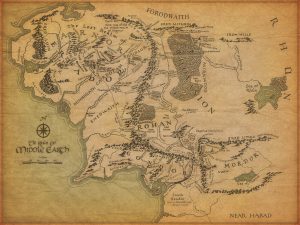
- Decide on your world’s setting—do you want your story to be set in the real world (eg. the Outlander series by Diana Gabaldon), do you want to create an entirely new world (eg. Middle Earth in the Lord of the Rings series by J.R.R. Tolkien), or would you prefer to create a blended world (eg. the Harry Potter series by J.K. Rowling)?
- If you find yourself getting stuck, consider using free online tools like Reedsy Plot Generator to help you combat writer’s block.
- Maintaining a list of points on the notes app on your phone or in a notebook will help you plot the elements you want in your fictional world.
Name your world/region
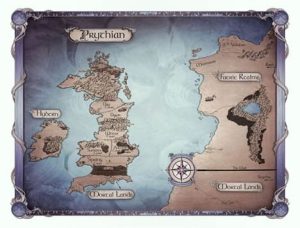
Next, it is important to give your world/region a catchy name and define its premise in one sentence. Some memorable examples from contemporary fantasy literature include Prythian (a land of fairies that exists north of the human world, from the A Court of Thorns and Roses series by Sarah J. Maas), Westeros, Essos, Sothoryos, and Ulthos (continents created by George R.R. Martin for A Song of Ice and Fire and its allied series), and Panem (a dystopian version of North America in the future created by Suzanne Collins for her Hunger Games trilogy and its prequels).
Draft a one‑page ‘world pitch’
Once you have the basics of your fantasy world nailed down, it is time to write a ‘world pitch’. Some points to focus on are where the world is situated, the characters who occupy this world and their positions within it, in what way it is different from reality as well as other fictional worlds, and why it matters to your characters situated within it.
A step‑by‑step worldbuilding guide
Once you are clear about the basics of your fantasy world, here are some prompts you can use to build in-depth detail to add more dimension to it.
Map and geography
When it comes to plotting the geography of your fictional world, it is always a good idea to begin by drawing a map. Plot various landmasses, rivers, mountains, and plains, and decide the climate of each region. It is a good idea to begin sketching the coastal outline first, then add mountains, and finally add rivers and seas. As a bonus, this map could even feature at the beginning of your book, as is often the case with fantasy novels!
Climate and ecology
The climate of your fantasy world is important as it affects and influences the stories of your characters. You can plot out the climate and ecology by planning out climate zones, prevailing winds, ocean currents, and how climate shapes biomes and travel. It is a good idea to place mountains in areas of higher latitude and use the formula latitude + mountains = rain shadows to place deserts.
People and cultures
Just like in the real world, not everybody speaks the same language or follows the same culture. It is important to create a diverse population that speaks different languages, has different naming styles and customs, values and taboos, festivals, food, and fashion. Great examples of the same can be found in the cultures of different courts in Sarah J. Maas’s A Court of Thorns and Roses series, and in the cultures of different regions in Westeros in the A Song of Ice and Fire series by George R. R. Martin. While it is perfectly fine to draw inspiration from real-life communities to build your fictional ones, it is important to avoid harmful stereotypes and prejudices.
History and timelines
Like the history of the real world, the history of your fantasy world must also consist of different eras, political rulers, and events, turning points that brought in major change, and so on. If you are confused as to where to start, it would be a good idea to build a 10-event timeline from past to present that directly impacts your plot. Make a list of defining historical incidents or famous personalities who directly affect your plot. It would also help to show how their actions have impacted your characters’ lives in the present day.
Magic systems and/or technology
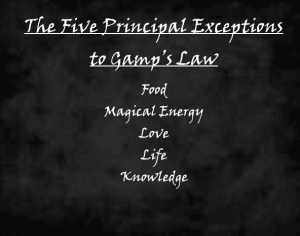
This is one of the most exciting parts of worldbuilding—showing how—through the existence of magic or advanced technology—your world is different from the real world. However, if magic or advanced tech were to exist and operate without any consequences or limits, there would be either a utopian world or complete anarchy. Hence, it is a good idea to show how magic/tech influences daily life, travel, war, medicine, etc., while also outlining five can/can’t rules and one meaningful cost. For example, in the Harry Potter series by J. K. Rowling, Gamp’s Law of Elemental Transfiguration states that something cannot be created from nothing; for example, while the quantity of food or beverage can be magically increased, it cannot be conjured from thin air.
Economy and resources
Like the real world, a fantasy world also has systems of trade, currency, and/or barter, and a variety of resources ranging from commonplace to valuable. It is important to outline a realistic economy and a list of resources with the relative value of each. It would also help to build a currency that can be used by your characters, for example, the ‘marks’ of Pern, a planet in Anne McCaffrey’s Dragonriders of Pern series. You can also outline methods by which the characters deal with scarcity caused by war/natural disasters/other conflicts to tie in with any potential conflict in your plot.
Power structures and religion
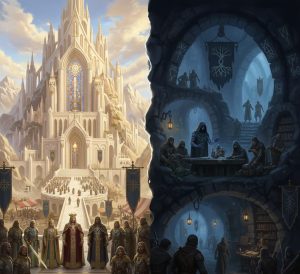
In most fantasy novels or series, a significant amount of conflict exists within structures of power—a despotic or corrupt government and an underground movement that seeks to topple it. Plot out a one-page ‘faction sheet’ listing goals, resources, allies, and conflicts, and outline government forms, factions, law or order, dominant religions, and their roles, as well as important ranks within the government or religious authorities.
Best worldbuilding tips
Here are some tips to keep in mind when you get started on your worldbuilding journey:
1. Think of unique and memorable names for people, places, languages, religions, etc.
2. While your fantasy world has the right to follow its own rules, it helps to have some aspects mirror reality to serve as a sort of point of reference for your readers and to add relatability.
3. Keep a notebook to scribble down all your ideas related to your fantasy world and plot them out accordingly.
4. If you are not sure about how to arrange the geography of your world, draw a map and allow your imagination to guide you.
5. Consider incorporating magical beasts like dragons/chimeras to inhabit your world and play an important role in the protagonist’s story.
6. If you are not sure as to how to go about building your world’s history, consider taking cues from real history—for example, George R. R. Martin took inspiration from the War of the Roses between the houses of York and Lancaster to construct the conflict between the Starks and Lannisters in his Game of Thrones series.
Worldbuilding checklist
Examples and mini case studies
Now that you have understood how to build your own fantasy world, here are some examples you can study for greater understanding:
1. The wizarding world in the Harry Potter series and the Fantastic Beasts movies—both written by J.K. Rowling—which exists alongside the ‘muggle’ or ‘real’ world.
2. The fairy world of Prythian in Sarah J. Maas’s A Court of Thorns and Roses series is independent of the human world and has its own government, power, and social structures etc.
3. The world of Narnia in the books of C. S. Lewis, which can be accessed through the back of an old wardrobe, is in many ways different from the ‘regular’ world.
4. Panem in Suzanne Collins’s Hunger Games books—a dystopian version of North America set in the future.
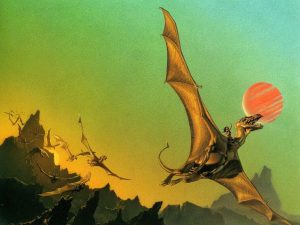
5. The planet Pern in Anne McCaffrey’s Dragonriders of Pern series was originally colonized by humans from Earth who have since forgotten their roots.
Worldbuilding tools and resources
Templates & Bibles
If you’re not sure where to get started, consider using an existing fantasy world (or two, or three) as sites of inspiration. Study the way the author has constructed climates, regions, characters, cultures, languages, etc., and see if you can draw inspiration from the same. Of course, your own world must be unique and not copied from any author’s existing creation. The fantasy world of Westeros and Essos created in George R. R. Martin’s works is a good place to start, as it closely mirrors the medieval world while differing significantly in its own ways, weaving in magic, mystery, and mythical beasts to add to its grandeur.
Mapping and climate helpers
If you are planning to take inspiration from the earth’s own climate to create that of your fictional world, consider using websites like Techgeo, which can help you understand the different climate zones, their vulnerabilities, geography, topography, and nearby waterbodies.
Organization tips
It is a great idea to keep a notebook or a mindmap on software such as Spreadsheets or Google Sheets, where you can organize and plan your notes and story at large. Maintain information on people, places, things, and plotlines so you can connect them all together as you see fit.
Creating a fictional world is an exciting process, and we would love to help you get it right. The right kind of locale can inspire wonderful adventures for your characters, and perhaps provide the scope to enlarge a novel into a whole series.
PaperTrue offers expert, hassle-free self-publishing services that allow you to get your manuscript edited and published by professionals. Check them out!
Here are some more resources:
Found this article helpful?
 0
0
 0
0